
This is a modern office space with two different design ideas. One side of the room is characterized by large windows that offer a view of a lush green garden and allowing abundant natural light inside the space, creating a serene and cozy feel. This side of the room features wooden floors, large plants, and a bookshelf filled with plants and books. The other side of the room has a more industrial and minimalist aesthetic, with concrete floors and walls, complemented with sleek and modern furniture.
Which side would you prefer to work?

We are inherently drawn to spaces that bring us closer to nature. We admire houses with big open terraces, we find open air rooftops in an office building perfect for team lunches and on a pleasant day, we prefer dining outside rather than indoors in a restaurant. Biophilic design expands on this idea by thoughtfully introducing natural elements into the built environment, seeking to recreate the comfort we experience in nature, within buildings.
Both biophilic and sustainable design are associated with nature, but their goals are substantially different. Biophilic design is a people-first strategy aimed at enhancing human physical and mental well-being by improving our connection to nature in the built environment. In contrast, sustainable design is a nature-first strategy focused on reducing the negative impact of human activities on the environment.
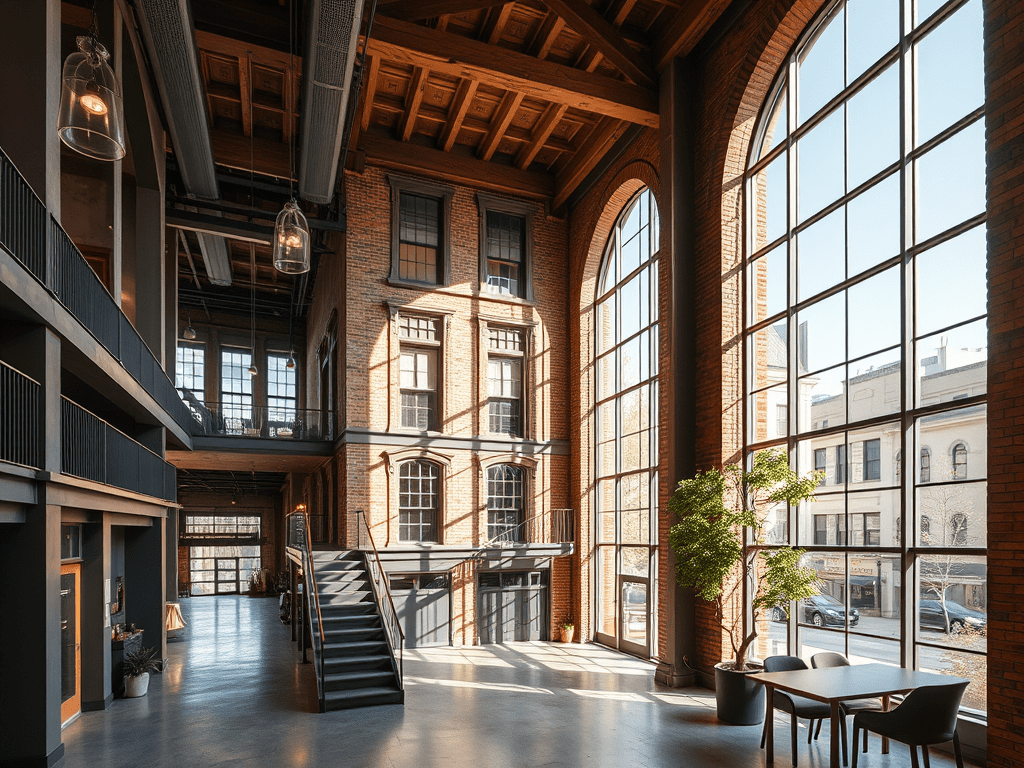
While the purpose of these two design concepts vary, their strategies often overlap. Using natural, locally sourced building materials, incorporating large openings to encourage daylight and expansive exterior views, and providing operable windows to let fresh air in are some examples of strategies that are both sustainable and biophilic.
However, the strategies for both may not always align. For example, from a biophilic design standpoint, the larger the window, the better it is, as they provide a greater connection to the outdoors. But this may not be sustainable. While promoting daylit spaces reduces electrical lighting loads, if the window is not thoughtfully sized and shaded, it can lead to excessive heat gain, significantly increasing in cooling loads. Similarly, if something is sustainable doesn’t necessarily make it biophilic. Using low-carbon concrete, low-E glazing, incorporating renewable energy sources are all sustainable design strategies but do not notably contribute to biophilic design.
So, to answer the question: Is biophilic design sustainable? Not always, but that doesn’t mean it can’t be. With thoughtful consideration, designers can develop strategies that are both sustainable and biophilic. That is the sweet spot.





 Built Basics
Leave a comment