
“The greenest building is the one that already exists”, Carl Elefante.
Just like materials can be reused, so can buildings; why demolish when you can transform. Adaptive reuse of old buildings is not a new concept, but is trending now more than ever. More and more architects and planners are choosing to rebuild the spaces instead of building them from scratch. SPUR’s Office-to-Residential initiative to deal with housing shortage is a fascinating research project on how old buildings can be repurposed to a more needed use.
However, reusing old buildings is not without its challenges. Buildings over 50 years old are often less energy-efficient than newer structures, leading to increased operational carbon. They may also require structural and seismic reinforcements and could contain hazardous materials like asbestos. Resolving these issues can be both costly and time-consuming. So, what makes adaptive reuse sustainable and desirable? The massive reduction in embodied carbon emissions and construction waste.
Embodied carbon refers to the total amount of greenhouse gas emissions associated with the materials and construction processes throughout the lifecycle of a building. This may include demolition of the existing structure, extraction and processing of materials, transportation of the materials and equipment to the site and the actual construction process. This is an invisible weight all buildings carry, even before the lights are turned on.
To combat this various strategies are implemented at different stages of construction. Using low-carbon materials like recycled steel or timber can significantly lower emissions during the extraction and manufacturing stages of the materials, while sourcing local materials minimizes transportation-related carbon emissions. However, reusing an existing building saves carbon across all the stages, making it a powerful approach to reducing embodied carbon.
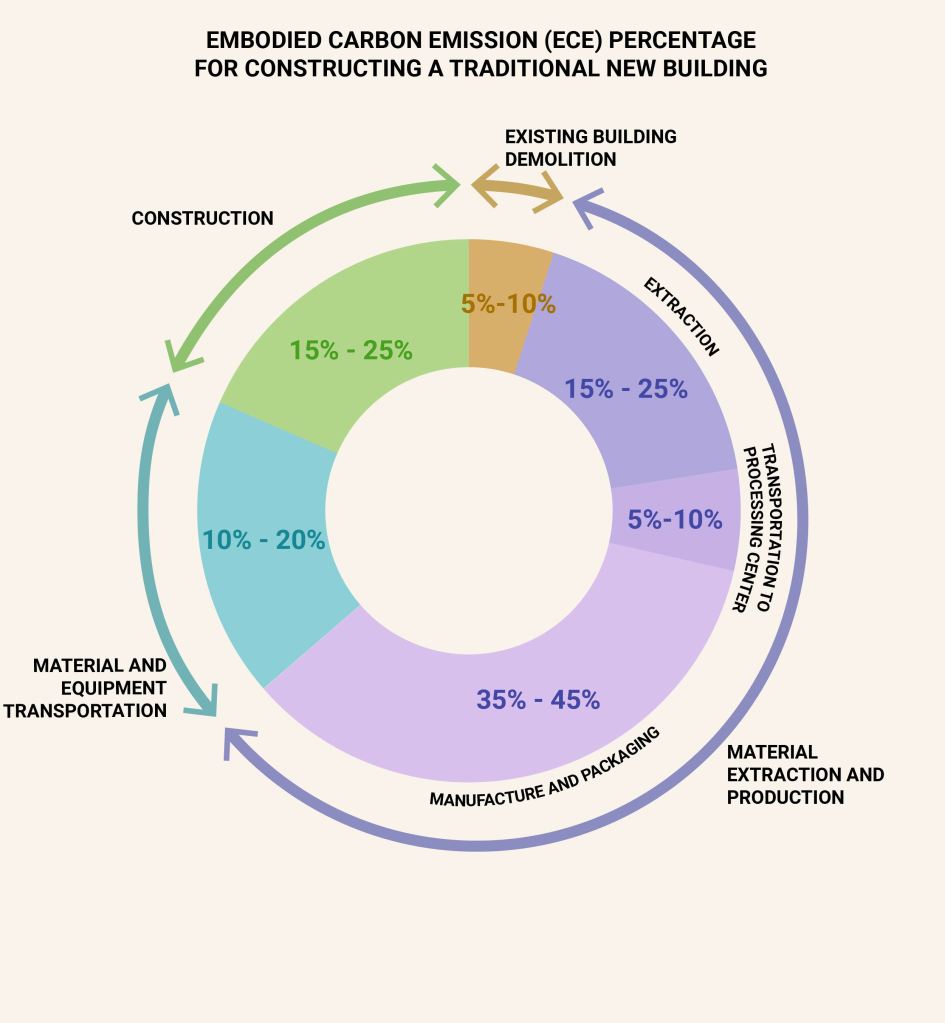

For example, by retaining the steel structure, steel deck and concrete floor in the renovation of a 17-story California State Department building in Sacramento, 65% of embodied carbon emissions were reduced compared to a typical new construction.
However, adaptive reuse goes beyond saving carbon or cost; it’s about enriching the communities. By transforming underutilized spaces into vibrant hubs, adaptive reuse celebrates history while embracing the new. It enhances the urban fabric by reviving memories and rekindling connections to places that have shaped communities for generations. These buildings become more than just walls and roofs; they evolve into symbols of resilience, nostalgia, and shared experiences; a beacon that brings people closer.
Take Building 12 at Pier 70 in San Francisco, for example. Originally built in 1941 as a massive shipyard, it was repurposed to become a dynamic gathering and event space overlooking the San Francisco Bay. It stands as a testament to the city’s industrial roots, capturing the craftsmanship and pride of a bygone era. To ensure the project feasibility against the future sea level rise, the building was lifted by 10 ft, keeping the structure and exterior facade intact, an intricate and expensive feat. Even though it cost more than building a new structure, the profound historic relevance, and the local community’s deep connection to it, made the investment worthwhile.
Sometimes just believing in an idea and seeing it through to the end, sets a precedent for so many more, it is all worth it. In a world facing increasing environmental and social challenges, adaptive reuse provides a hopeful pathway forward, where history, sustainability, and community converge to create a better future. “Old ideas can sometimes use new buildings. New ideas must use old buildings.” – Jane Jacobs.





 Built Basics
Leave a comment