
Reusing existing buildings is one of the most sustainable strategies, both environmentally and economically. Adaptive reuse significantly reduces the embodied carbon emissions while also saving on construction time and cost. However, many structurally sound buildings are still deemed unfit for reuse. Why? Often because their original function has become redundant, and retrofitting them for a new purpose is not economically or environmentally feasible, undermining the true potential of adaptive reuse.
Our way of living is changing faster than buildings can keep up, often rendering them obsolete sooner than expected. The COVID-19 pandemic, for example, permanently has altered how we work, leaving many large office buildings vacant. To remain relevant and having a potential for reuse, buildings must be designed to adapt to changing needs from the start. In today’s rapidly shifting world, adaptability is as essential a character of a building as daylight, ventilation, or thermal comfort.
Designing for adaptability is not about predicting the future. It is about reducing constraints and creating systems that can respond to change. True adaptability is established early, through deliberate planning decisions that allow buildings to evolve with minimal disruption over time.
The following design strategies outline how to design adaptability into buildings.
1. Regular Structural Grid
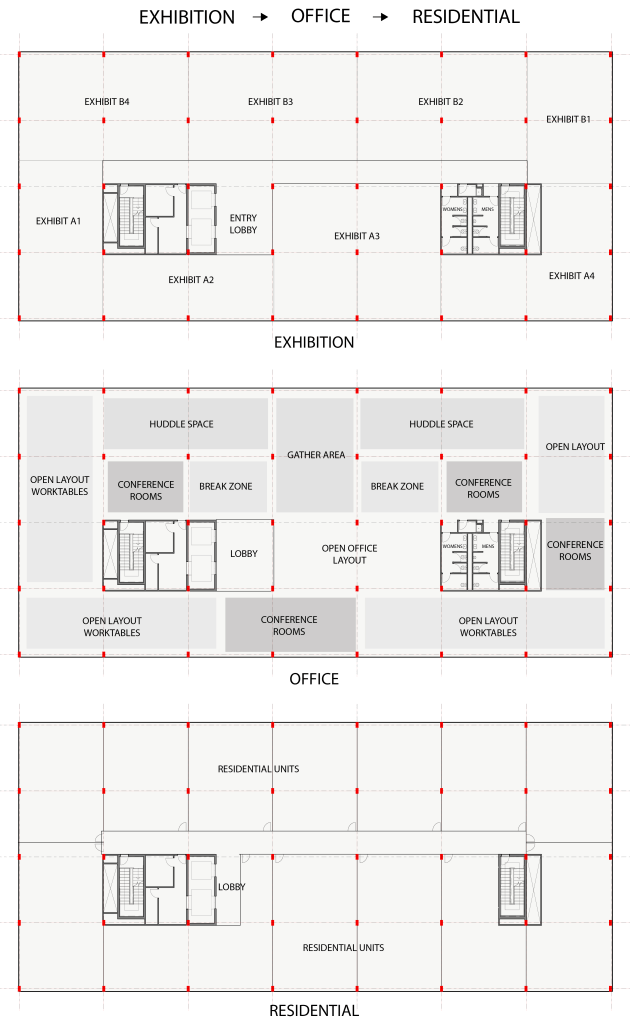
The structural grid is one of the most expensive and disruptive elements to modify once a building is constructed. To support future, unanticipated uses, the structural system must be regular, creating large, open spans that can be reconfigured as required.
The image below illustrates how a consistent structural grid can support multiple uses, enabling the building to be repurposed over time.
2. Centralized Service Cores
Locating circulation and services in centralized cores keeps the rest of the floor plate open and flexible. For larger floor plates, dividing the core into two or more zones can create multiple MEP spines and reduce horizontal distribution distances.
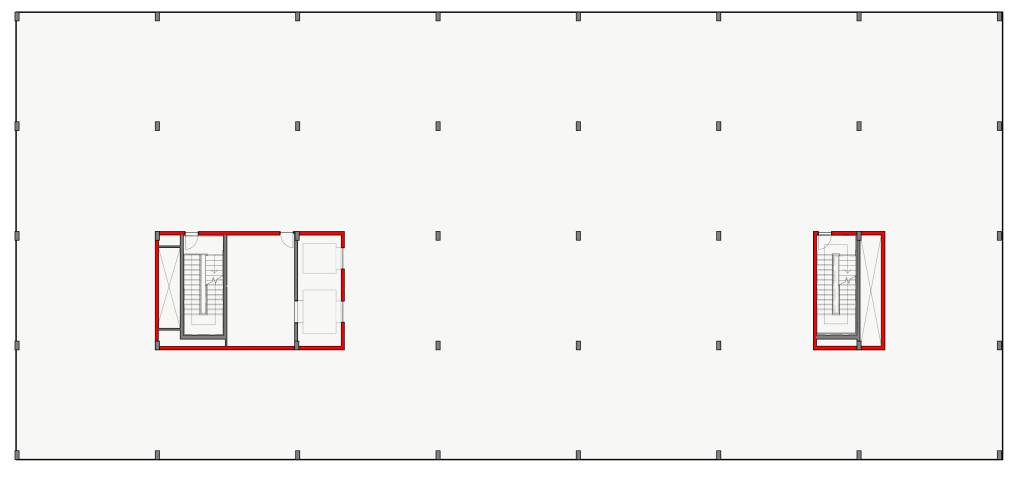
When services are concentrated in centralized, well-distributed locations, systems can be upgraded, expanded, or redistributed with minimal disruption to the rest of the floor plate.
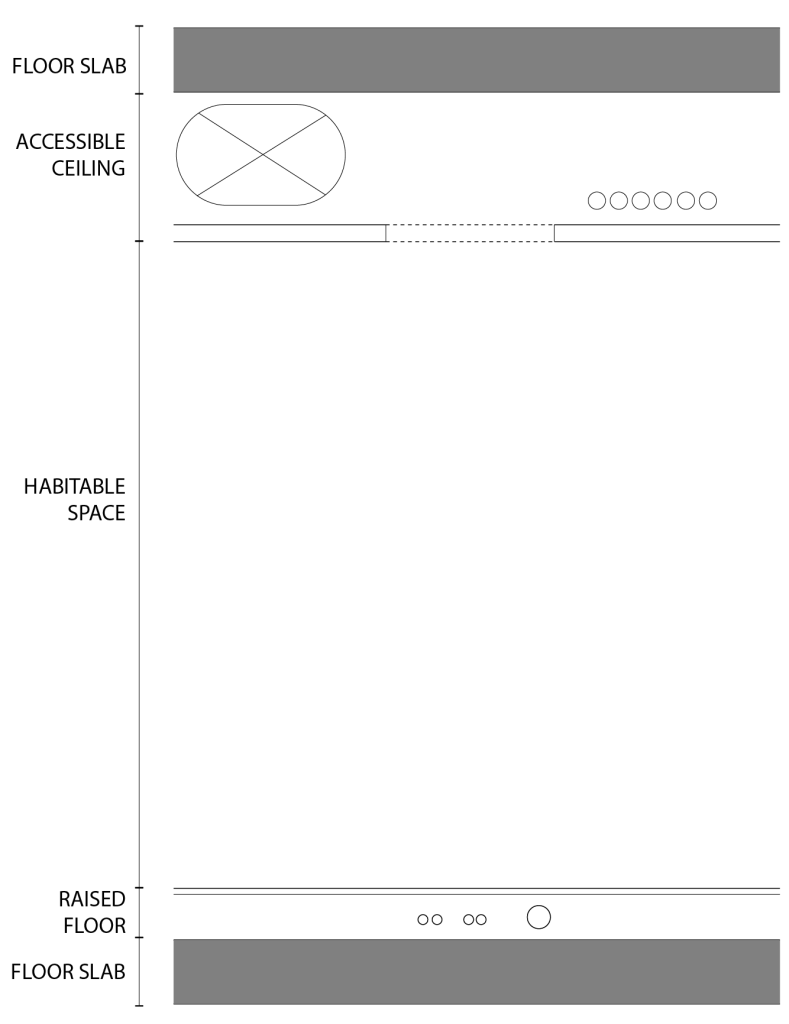
3. Raised floor and Accessible Ceiling
Raised floors and accessible ceilings enable building services to be modified without major demolition, allowing spaces to be reconfigured efficiently as functional needs change.
4.Adaptable Egress and Circulation
Staircases, elevators, and egress routes should be designed with enough capacity and flexibility to support different occupancies over time. A building that may transition between residential, office, or institutional use should have circulation systems that can accommodate varying code requirements and occupant loads.
Comparing the stairs width required for a 16,000 SF floor plate of Residential, Office and Gallery per CBC 2025 (Section 1005.3.1 – Stairways).
| RESIDENTIAL | OFFICE/BUSINESS | GALLERY | |
| Occupant Load Factor | 200 Gross SF/person | 150 Gross SF/person | 30 Gross SF/person |
| Estimated Occupant Load | 80 | 107 | 500* |
| Minimum Number of Exits | 2 Exits | 2 Exits | 2 Exits |
| Minimum required Width per Staircase (0.2 in/person for sprinklered building) | 8” | 10.5” | 50” |
* Occupant load to be limited to 500 to not trigger the requirement of additional exit per CBC 2025 (Table 1006.3.1)
While stairways must be at least 44 inches wide when serving more than 49 occupants (per CBC 2025, Section 1011.2), increasing the width by just 6 inches can provide enough additional capacity to support higher occupant loads if the building is later repurposed into an exhibition space.
Circulation designed for flexibility helps ensure the building remains usable as regulations and functions change.
5. Modular Systems
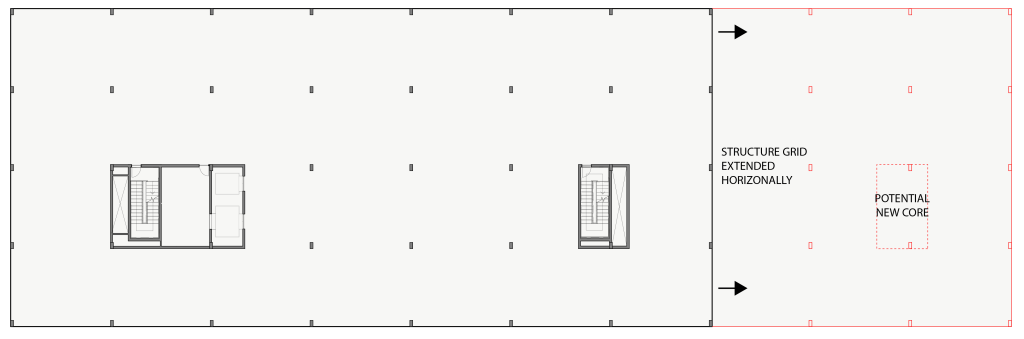
A building planned with modular systems allows components to be modified, expanded, or replaced independently of the overall structure. This goes beyond just using modular or prefabricated construction elements, but the building layout must also allow change over time.
For example, structure bays designed for easy horizontal expansion.
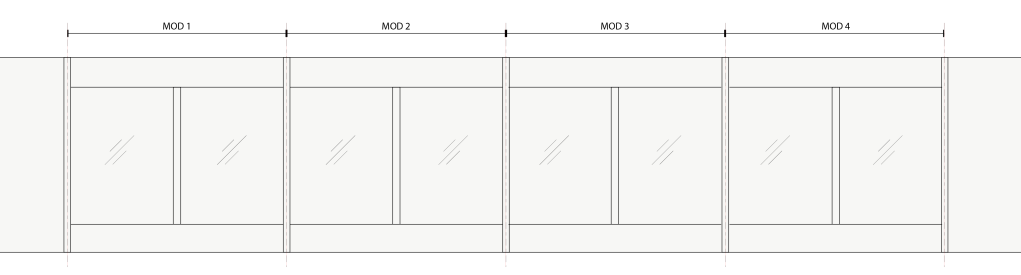
Another example would be a facade systems with repeatable panel modules.
Buildings rarely fail because they are old. They fail because they cannot change. Designing with adaptability in mind ensures that buildings can respond to new demands, new regulations, and new uses without starting over.





 Built Basics
Leave a comment